Artificial intelligence is becoming an increasingly common tool for learning, yet many young people have little experience evaluating the accuracy of AI-generated information. Preparing youth for a technology-driven future requires more than teaching them how to use AI, it requires helping them develop the critical thinking skills needed to verify information, compare sources, and use digital tools responsibly. The Regional 4-H STEM Summer Camp brought together more than 60 youth from nine North Carolina counties to participate in hands-on STEM experiences led by Extension educators. Recognizing an opportunity to incorporate digital literacy into the camp, the Guilford County Digital Literacy Agent partnered with the Caswell County Digital Literacy Agent to develop a new lesson that blended artificial intelligence with astronomy and scientific inquiry.
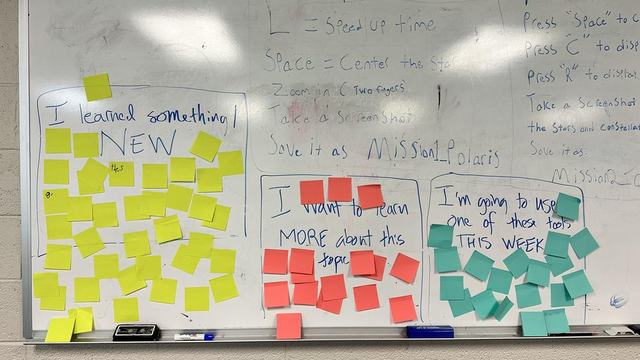
Working together, the two Digital Literacy Agents designed and delivered AI & Astronomy, an interactive lesson that challenged youth to think critically about emerging technology while exploring the night sky. Using generative AI alongside the Stellarium planetarium software, students completed guided astronomy missions to locate Polaris, identify Orion and other constellations, observe changes in the night sky over time, and compare AI-generated answers with a scientific simulation. Rather than presenting AI as an authority, the lesson emphasized verification, encouraging participants to evaluate responses by consulting trusted tools and multiple sources. The lesson complemented the camp's broader STEM curriculum, which included robotics, engineering challenges, drones, and agricultural technology demonstrations, demonstrating how digital literacy can strengthen learning across multiple STEM disciplines. To measure participant learning, students completed written reflection questions and a sticky-note evaluation activity documenting what they learned, what they wanted to explore further, and whether they planned to continue using the digital tools introduced during the session.
Student reflections showed that participants gained both astronomy knowledge and a deeper understanding of responsible AI use. Youth reported learning about Polaris, Orion, Canis Major, and the movement of the night sky while recognizing that interactive scientific tools could provide information AI alone could not. When asked how to verify AI-generated information, students consistently identified strategies such as cross-referencing multiple sources, checking original sources, and recognizing that "AI isn't always right." The sticky-note evaluation demonstrated strong engagement across all three rotating groups. Nearly every participant contributed responses describing something new they had learned, identifying topics they wanted to explore further, and committing to use one of the featured digital tools after camp. Together, the written reflections and visual evaluation provided evidence that youth were not only engaged during the lesson but were motivated to continue exploring astronomy and digital technology independently. The collaboration between Guilford and Caswell County Digital Literacy Agents demonstrated how Extension educators can integrate digital literacy into traditional STEM programming. By teaching youth to question, verify, and thoughtfully use artificial intelligence, the lesson equipped participants with skills that extend well beyond astronomy and will remain valuable as AI becomes an increasingly common part of education and everyday life.
Objective: 4-H Youth Development
Team Members: Jeffrey Cates (Guilford), Tyler Cobb (Caswell), Meredith Kreeger (Guilford), Lauren Taubert (Guilford)