In Catawba County, more than half of public-school students qualify for free or reduced-price lunch, reflecting economic hardship and limited access to enrichment opportunities. Students from low-income communities are 50 percent less likely to pursue STEM careers than their higher-income peers, often due to poverty and limited access to digital resources (Education Commission of the States 2016; Pew Research Center 2021). For many families, this means fewer opportunities for their children to engage in high-quality, hands-on STEM learning experiences outside the classroom. This gap is especially concerning for children in grades 2 to 4, a critical window when curiosity and interest in science, technology, engineering, and math are just beginning to take shape.
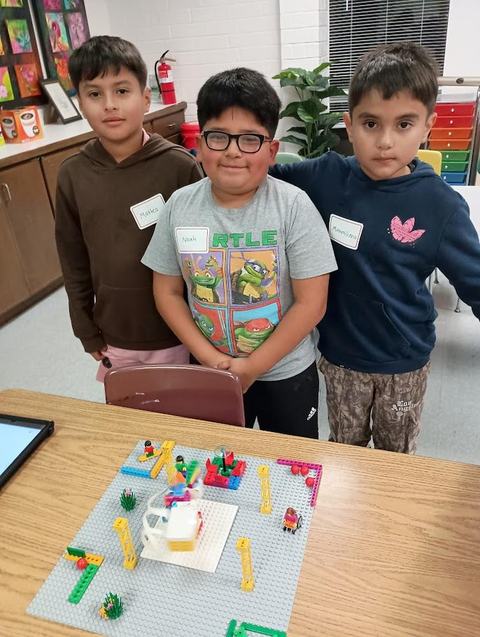
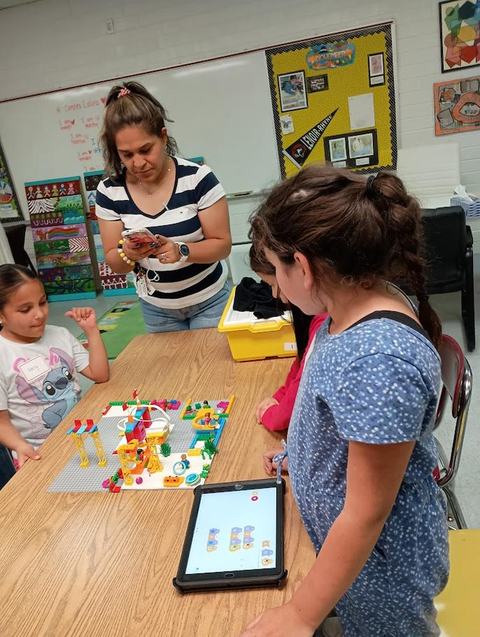
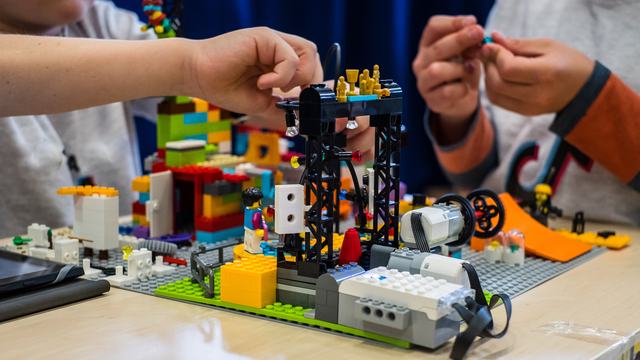
To address the lack of accessible STEM opportunities, Catawba County 4-H partnered with the Catawba County Library System to offer free LEGO Robotics programs at the Southwest, St. Stephens, and Newton library branches. Through this partnership, Catawba County 4-H used the First LEGO League Explore curriculum to engage students in grades 2 through 4 in hands-on STEM learning. Working in small groups, participants built, programmed, and problem-solved using LEGO robotics kits, eventually creating presentations to share their work with their families. To support the program, trained adult and teen volunteers served as facilitators, guiding each group through the learning process and helping foster interest and confidence among the young learners.
The results from this year’s program demonstrate a meaningful impact on the participating youth and their families. Parent evaluations revealed that 87.5 percent of children showed an increased interest in STEM-related topics, while 87.6 percent demonstrated a significant improvement in their ability to work effectively within a team. Furthermore, 75.1 percent of parents observed a noticeable growth in their child’s problem-solving capabilities. The enthusiasm for the program was unanimous, with 100 percent of parents stating that their child would be interested in attending future STEM programs offered through 4-H. Beyond the data, the personal growth of the students was evident in the feedback from families; one parent highlighted that they appreciated how the teamwork-centered approach built their child's confidence while integrating math, imagination, and discipline.