The rapid evolution of agricultural technology has introduced Unmanned Aerial Vehicles (UAVs) as transformative tools for modern farming. However, many North Carolina producers faced barriers to adoption, including a lack of clarity regarding the economic value of drones, complex Federal Aviation Administration (FAA) licensing requirements, and a need for technical training in precision applications. Without a clear understanding of how to integrate these "flying computers" into their daily operations, local farmers risked missing out on significant efficiency gains and cost-reduction opportunities in crop management.
Extension Impact: Flying High - Utilizing Drones on Your Farm
(Updated: March 9, 2026, 2:25 p.m.)
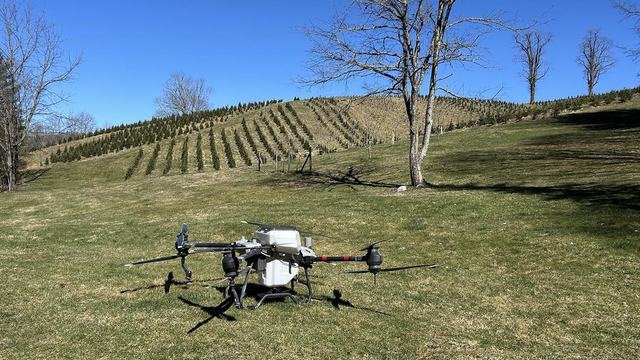
In response to this need, agents in the Northeast District of NC Cooperative Extension hosted the "Flying High: Utilizing Drones on Your Farm" educational workshop. The program brought together 24 participants from across the agricultural industry and various government agencies. The event featured a comprehensive curriculum delivered by experts from NC State University and experienced commercial contractors. Key training areas included regulatory guidance and precision application. Commercial contractors provided insights into hardware capabilities, mission planning software, and swath testing for optimal spray patterns.
The workshop achieved significant shifts in participant knowledge and intended behavior. The majority of attendees reported a clearer understanding of the tangible value of drone use in agricultural production and a stronger grasp of the necessary licensing and legal regulations. Participants indicated they now feel drone utilization would be highly beneficial to their operations and expressed intent to apply the technology for precision seeding and spraying in future seasons. The 24 participants represented a combined 7,800 acres of field crops, pastures, and hayfields. Based on written workshop evaluations, the implementation of drone technology is estimated to realize an average savings or value-add of $20 per acre. For the acreage represented at this event alone, the total estimated economic impact is $156,000 annually.
Objective: Plant Production Systems
Team Members: Beth Burchell (Halifax), Andy Burlingham (Pitt), Heather Glennon (Nash), Jared Harrell (Perquimans), Brittany Pendleton (Nash), Brandon Pike (Northampton), Matthew Place (Franklin), Kimberly Webb (Wake)
Written By